
Black Cats
Black cats have long been subjects of fascination, folklore, and sometimes, superstition. Far from being unlucky, these sleek felines possess a unique charm, a rich history, and some interesting biological traits.
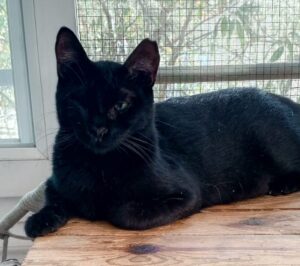
The Genetics of Black Cats
The solid black coat color in cats is determined by a specific gene that produces a high concentration of melanin (the pigment responsible for dark coloration).
- Dominant Trait: The gene for black fur is generally dominant over other color genes. However, a cat needs to inherit two copies of a recessive gene for solid color to actually express solid black. If a cat carries a dominant tabby gene, even if it has the black pigment, it might appear to have faint tabby stripes, especially in sunlight. These are often called “ghost tabbies.”
- Melanism: The intense black coloration is a form of melanism, which is an increased development of the dark pigment in the skin, hair, or feathers.
- Sunlight Fading: Interestingly, if a black cat spends a lot of time in the sun, their fur can sometimes lighten to a rusty brown color. This is due to the sun breaking down the black pigment (eumelanin) in their fur.
Historical Significance and Superstitions
Black cats have a particularly rich and varied history in human culture:
- Ancient Egypt: In ancient Egypt, all cats, including black cats, were revered and considered sacred.
- Medieval Europe: During the Middle Ages, black cats became associated with witchcraft and evil. This negative superstition, unfortunately, led to persecution.
- Good Luck vs. Bad Luck: Depending on the culture, black cats can be seen as either good luck or bad luck:
- Good Luck: In Great Britain (especially Scotland and the Midlands), Japan, and some parts of Asia, a black cat crossing your path, owning one, or seeing one is considered a sign of good fortune and prosperity. Sailors traditionally believed black cats brought good luck and ensured a safe return.
- Bad Luck: In many Western cultures, particularly the United States, a black cat crossing your path is still sometimes seen as a harbinger of bad luck, a superstition rooted in medieval folklore.
Personality Traits
Like all cats, individual personality varies greatly regardless of coat color. However, many black cat owners report that their feline friends are:
- Affectionate and Mellow: Often described as calm, gentle, and very loving towards their owners.
- Playful and Intelligent: They are known to be curious and enjoy interactive play.
- Adaptable: Many owners find black cats to be quite adaptable to various living situations.
The Impact of Superstition Today
Despite their many wonderful qualities, black cats still face challenges due to lingering superstitions. They are sometimes less likely to be adopted from shelters compared to cats of other colors, and they are sadly more often targeted in cruelty cases around Halloween. Many shelters actively try to dispel these myths and promote the adoption of black cats.