
Safe Natural Remedies for Cats
Cats, with their discerning palates and sensitive systems, can benefit from gentle, natural remedies for minor ailments. Here’s a closer look at some safe options: 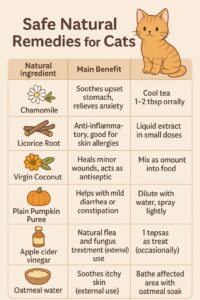
1. Chamomile: The Calming Bloom
Chamomile is renowned for its calming properties. For cats, a small amount of cool, diluted chamomile tea (1-2 tablespoons orally) can help soothe an upset stomach or ease anxiety. This can be particularly useful during stressful events like vet visits or thunderstorms.
2. Licorice Root: The Anti-Inflammatory Powerhouse
Beyond its sweet flavor, licorice root possesses significant anti-inflammatory qualities. A liquid extract in small doses can be beneficial for skin allergies or other inflammatory conditions. Always ensure it’s a cat-safe preparation and consult your vet for appropriate dosing.
3. Virgin Coconut Oil: Nature’s Antiseptic
Virgin coconut oil isn’t just for cooking! It has natural antiseptic properties and can aid in healing minor wounds. A small amount can be mixed into your cat’s food or applied topically to soothe irritated skin.
4. Plain Pumpkin Puree: The Digestive Aid
For digestive woes like mild diarrhea or constipation, plain pumpkin puree is a fiber-rich hero. Dilute it with water and spray lightly onto food. Its gentle action can help regulate your cat’s bowel movements.
5. Apple Cider Vinegar: External Skin and Coat Support
Apple cider vinegar can be a natural ally against fleas and fungus, but it’s crucial to use it externally and sparingly. A teaspoon as an occasional treat (diluted) can be considered, but it’s primarily used as a diluted rinse for skin and coat issues. Always dilute it significantly to avoid skin irritation.
6. Oatmeal Water: The Skin Soother
If your cat is battling itchy skin, oatmeal water can provide relief. Prepare an oatmeal soak and bathe the affected area. The colloidal oatmeal helps to soothe irritation and reduce itching.
Important Considerations:
-
Toxicity: Always be vigilant about what you offer your cat. Avoid common human remedies like garlic, onion, tea tree oil, grapes, and real aloe vera, as these are toxic to felines.
-
Dosage: Cats are much smaller and more sensitive than humans, so “less is more” is a good rule of thumb. Doses should always be small and tailored to your cat’s size and the specific condition.
-
Veterinary Consultation: These natural remedies are best for minor issues. For any serious or persistent health concerns, always consult your veterinarian. They can provide an accurate diagnosis and recommend the safest and most effective course of action for your beloved companion.